
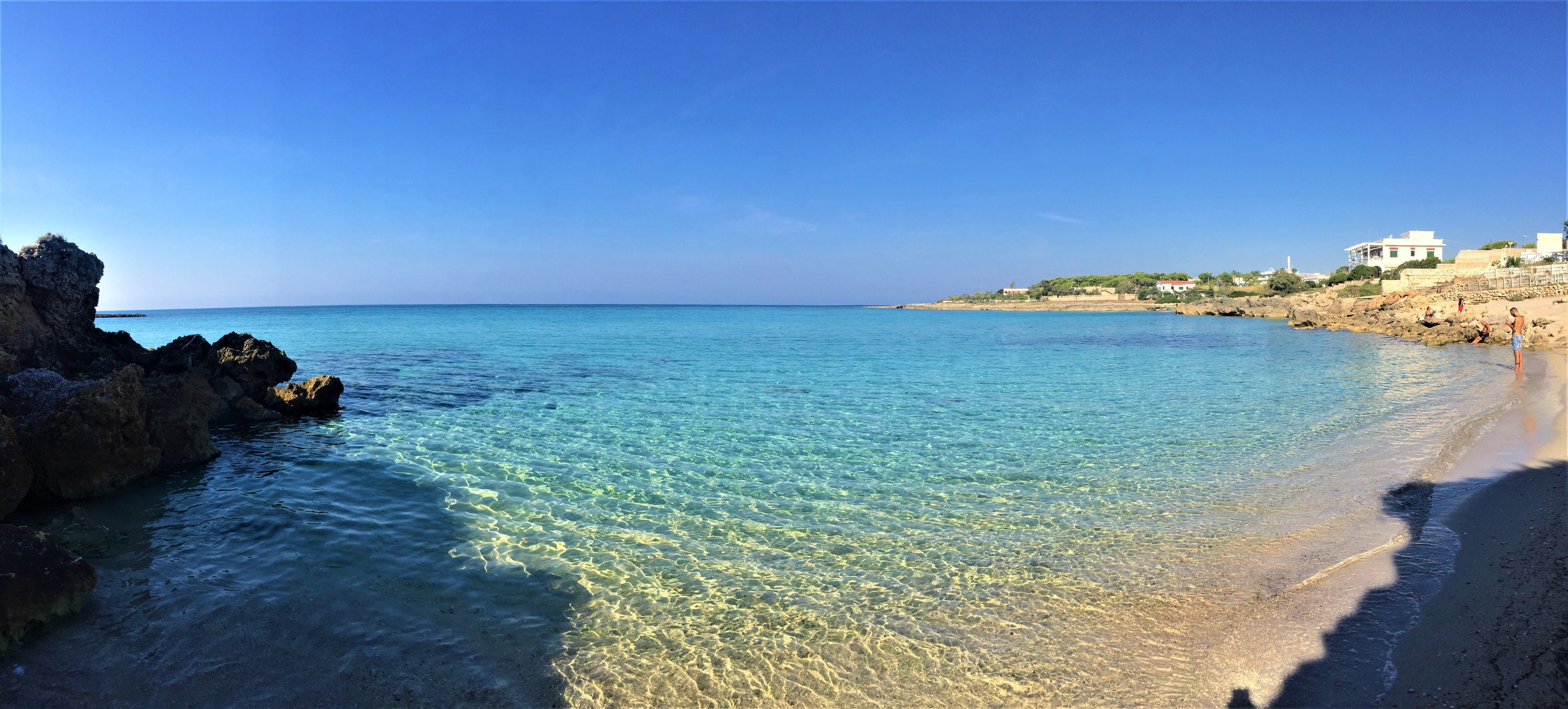
COSTA
Taking care of a place means being present, even when the emergency is no longer in the headlines.
- Year
- 2026
- Area
- Fragagnano, Pulsano and the coastal area of Taranto
- Programme
- European Solidarity Corps
- Support
- Municipalities of Fragagnano and Pulsano
Places are not protected only when an emergency is visible.
COSTA was created by a group of young people who wanted to turn concern for their territory into concrete participation. MediterrArt APS supports a path that combines observation, care for shared spaces and shared responsibility.
The fire that affected the Taranto coastline on 29 May made one thing even clearer: attention to fragile places must remain constant throughout the year, not only when flames are visible.
From mapping neglected places to collecting abandoned waste, each activity turned observation into concrete action.
Observe, document, return to the same places.
During site visits, volunteers collect photographs and notes, document abandoned waste and other critical issues, and identify areas requiring attention. Each observation contributes to a more accurate picture of the territory.
The work does not end after a single visit: returning to the same places allows volunteers to check conditions over time and follow the development of the issues identified.
These are not isolated cases.
Along roads, rural areas and parts of the coast, the group observed abandoned waste, building materials, small illegal dumping sites and neglected spaces. In several cases these issues overlap with dry vegetation, increasing the level of attention required.
- Abandoned waste and bulky items
- Demolition materials and improper dumping
- Neglected and degraded areas
- Dry vegetation and possible risk points
Giving every observation a place on the map.
During field visits, photographs and notes became points on a map. Read together, these reports reveal patterns that can be harder to see in isolation.
Explore an extract of the observations collected between June and July 2026, filtering by area and type of issue. It is neither a ranking of damage nor a list of problems already resolved.
Locate.
Return.A map built from the COSTA group's field observations.
Reading the territory
121 points in the KoboToolbox extract · 22 June – 31 July 2026
The points can already be explored. To view streets and place names, load OpenStreetMap tiles. Your browser will connect to an external service.
Approximate positions for public viewing. External map tiles not loaded.
Source: COSTA geolocated observations exported from KoboToolbox. This manually updated extract is not connected live to the reporting form; points may be unverified or no longer current.
Noticed another issue? Report itA map does not replace a field visit.
It guides further observation and helps spot recurring problems. The work stays on the ground: photographs, checks and, where appropriate, contact with the relevant authorities.
01 · Observe
Photograph, describe and consider the setting.
02 · Locate
Associate each observation with a place.
03 · Return
Check how conditions change over time.
Have you noticed a critical issue? Report it.
Abandoned waste, dry vegetation, illegal dumping and neglected areas can be reported through the COSTA form. You only need to indicate the place and a short description; photos and contact details are optional.
Reports extend observations beyond the field visits already documented. Each contribution is reviewed and, where appropriate, checked on site and shared with the relevant authorities.
Open the reporting formProject materials describe the form as anonymous. For immediate danger, contact the relevant emergency services.
- 01Indicate the place
You can report a specific point in the territory where you noticed an issue.
- 02Describe the situation
A short explanation, together with optional photos, helps clarify the problem.
- 03The group checks it
If needed, COSTA carries out a second verification and forwards the report to the competent authorities.
177 kg of waste collected in Fragagnano.
On 15 September 2026, volunteers collected 177 kg of abandoned waste from a limited area on the outskirts of Fragagnano. The materials were recorded separately—glass, mixed waste and plastic—to document both the impact of the action and the need for continued care of these places.
Field update · 15 September 2026
Another 146 kg collected in a limited area.
During the latest activities, the group collected 84 kg of mixed waste, 53 kg of glass and 9 kg of plastic. The discovery of more abandoned waste, even as the project came to a close, shows why continued attention and practical action are needed.
Places, people, actions.
A selection of photographs from site visits, observed critical issues and clean-up activities on the territory.
The project has ended. Our commitment to the territory continues.
C.O.S.T.A. is a project implemented within the European Solidarity Corps and funded by the European Union.
← Back to projects